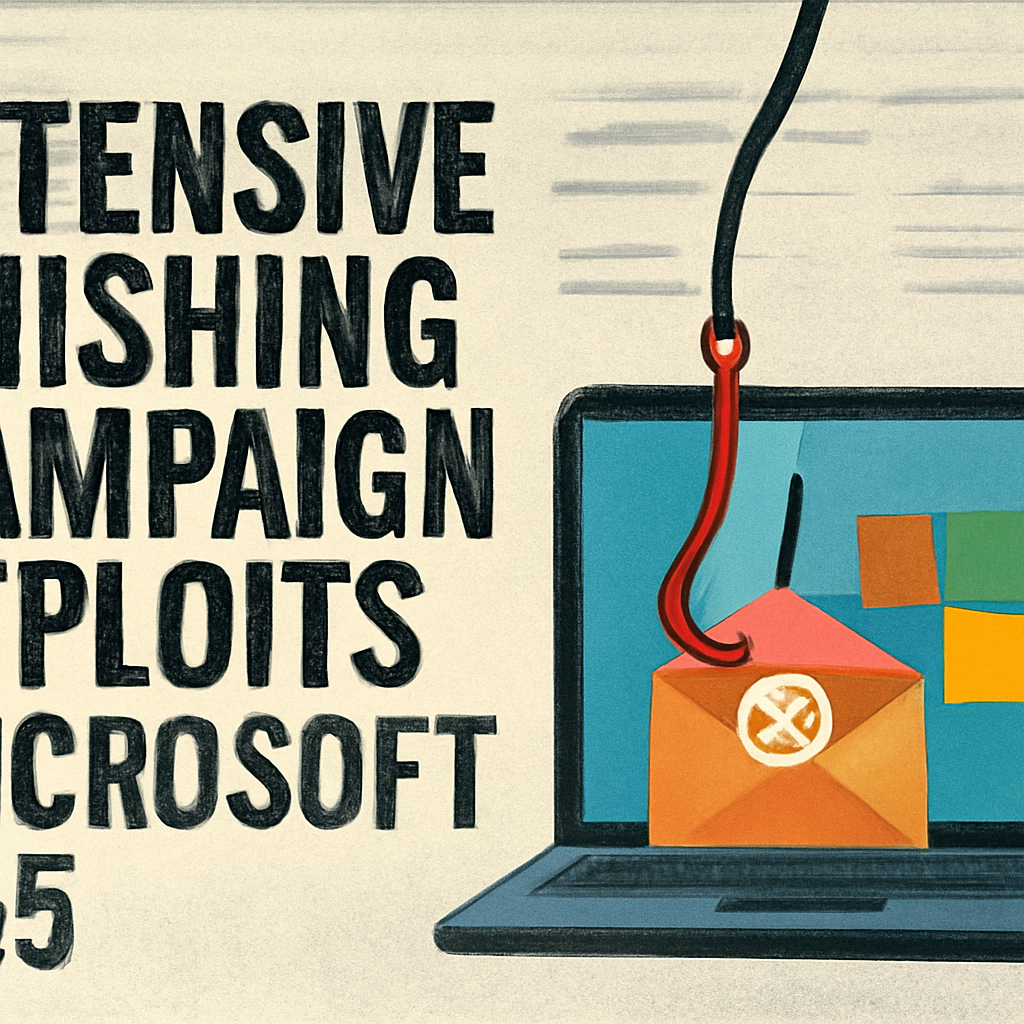
On November 13, 2026, Microsoft Threat Intelligence detected a well-coordinated and high-volume phishing campaign aimed at organizations across diverse sectors globally. The attackers employed phishing emails that masqueraded as authentic Microsoft 365 service-health notifications to entice recipients into clicking on a harmful link. These messages instilled a false sense of urgency by asserting that emails had been held during a service outage and would be deleted within 24 hours unless the recipient acted to recover them. This tactic aligns with historical patterns of attackers who consistently seek to exploit significant global events in their social engineering schemes.
Microsoft noted that the threat actors utilized specific sender domain names, randomized outage subjects, recipient-specific tracking links, and a common non-Microsoft destination to enhance the relevance of the messages while complicating straightforward pattern recognition. We believe that this activity was likely aimed at credential phishing; however, the evidence available does not confirm credential capture, malware distribution, or post-compromise actions. Various threat actors may continue to seek opportunities to exploit significant global events in their social engineering narratives.
If credentials were submitted, organizations should evaluate the potential risks of account compromise, mailbox access, business email compromise, internal phishing, manipulation of inbox rules, and access to cloud collaboration data. Microsoft Defender is equipped to block malicious domains associated with this campaign, and Microsoft Defender for Office 365 is capable of blocking and quarantining phishing emails. We will persist in monitoring this campaign and other related threats. Security teams can leverage Microsoft Defender for Office 365 and Microsoft Defender XDR functionalities to investigate messages, URLs, clicks, and any potential follow-up activities.
Phishing attack overview
Microsoft examined the email lures dispatched on November 13, 2026: these emails followed a subject pattern of “Outage – ” and featured display names constructed from a three-character, organization-style prefix followed by “Outage Notification” or “Service Health.”
Example subject line:
- Outage – aF7vG6
Example display names:
- MSF Outage Notification
- AMZ Service Health
One sample email body mentioned a supposed Exchange Online incident on November 12 and claimed that four messages were held following the outage. The urgency created by a 24-hour deletion deadline and the prominent “RESTORE MESSAGES” call to action were designed to prompt immediate engagement.
The campaign utilized distinct sender domains, such as moments-notice[.]com, planetmaison[.]com, and newbooker[.]com. The messages also employed email delivery and link tracking infrastructure to create recipient-specific URLs. In several instances, click-tracking links directed users to reallifeaccounting[.]com or reallifeaccounting[.]com/themelist0.html.
The sample set was link-based: no QR codes or non-EML attachments were detected, and Microsoft did not find evidence of executable, archive, document, or other malware payload delivery. The off-brand destination and the impersonation of Microsoft 365 support an assessment of likely credential phishing; however, the available evidence did not include the final page source, credential fields, credential-submission telemetry, or post-compromise activity. Consequently, Microsoft has not linked the campaign to a specific threat actor or malware family.
Attack chain overview
- Delivery: A user receives an email from the moments-notice[.]com, planetmaison[.]com, or newbooker[.]com sender-domain cluster. The subject line contains “Outage -” followed by a randomized string of character tokens. The body of the message includes a fabricated email conversation designed to be concealed from the recipient, appearing to be an attempt at evading mail filtering.
- Impersonation: The message pretends to be a Microsoft 365 service-health notification, employs a target-specific display-name prefix, and references Exchange Online, Outlook, Teams, SharePoint, and Copilot.
- Social engineering tactics are employed to manipulate the recipient into taking action.
Source: Original article